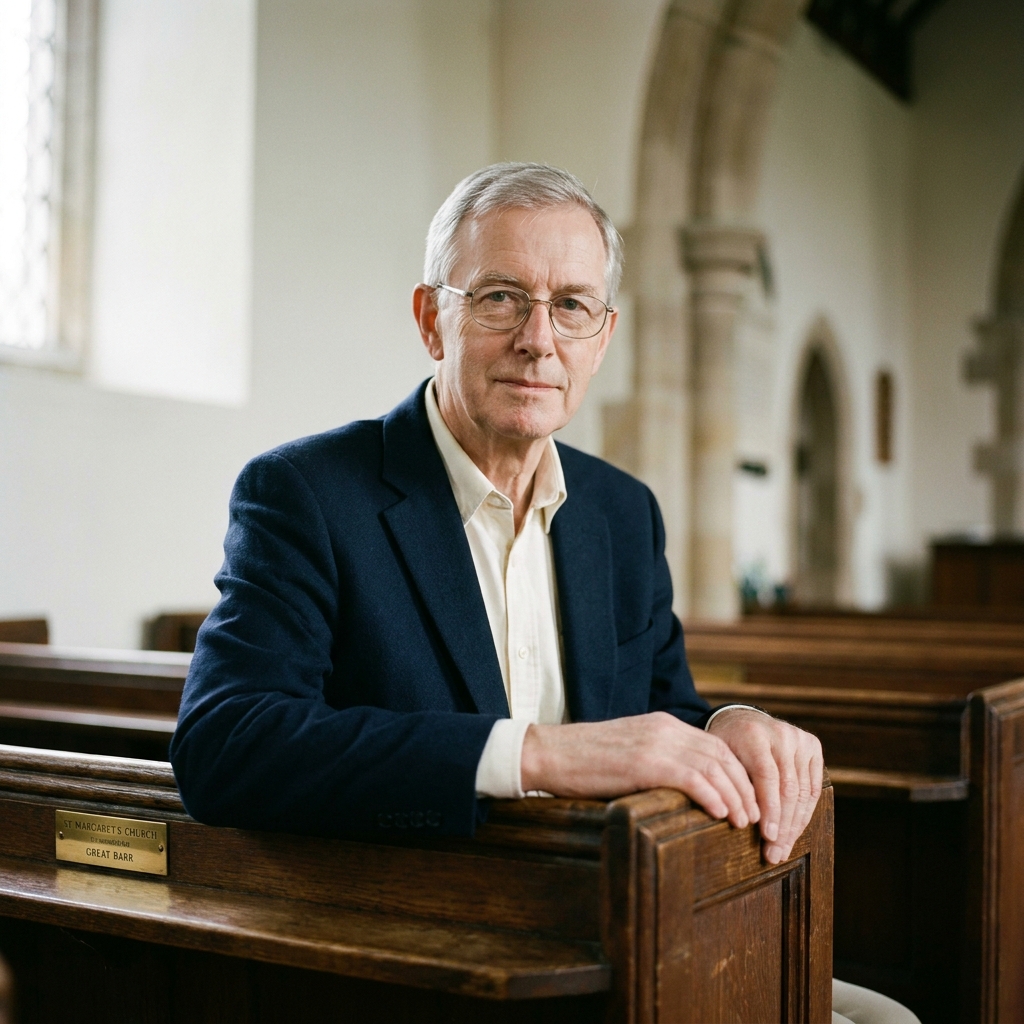
Mark Howell
Chair · Serving since 2018
A retired chartered surveyor from Walsall, Mark joined the board in and has chaired since 2022. He leads on fabric and the Restoration Reserve.
A short history of the trust
Great Barr Church Lands is one of England's quieter parochial trusts. We were brought into being by a Charity Commissioners' Scheme dated , drafted to consolidate three older charitable bequests of land and rentcharges that had, for centuries, supported the Parish Church of St Margaret, Great Barr. The objects have been narrow on purpose since the start.
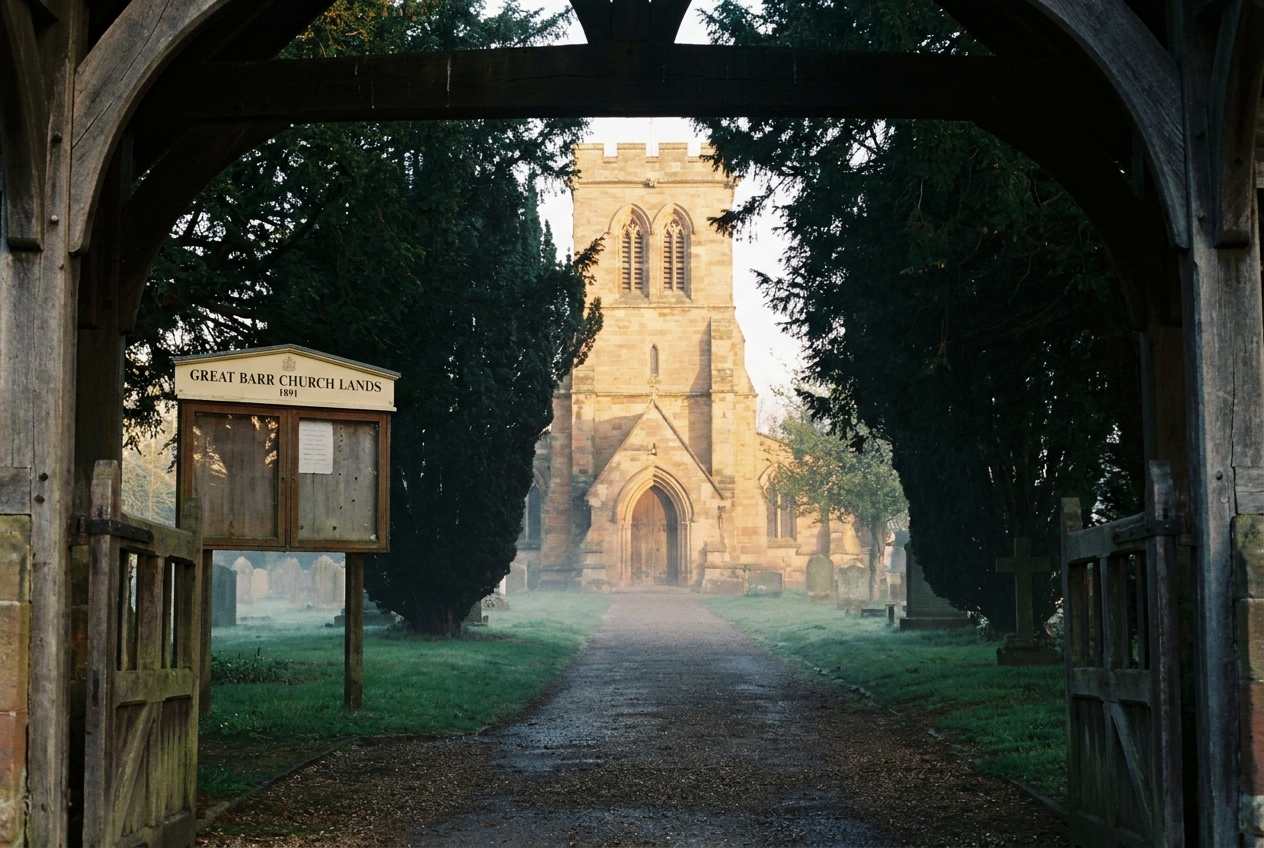
Above · St Margaret's, Great Barr — early light, 4 May 2025. Photograph by James Pritchard.
Founding
The trust dates from a moment when the Charity Commissioners — newly empowered by the Charitable Trusts Acts of the 1850s and the further reforms of the 1880s — were tidying up the patchwork of small medieval and early-modern parochial endowments that lay across the English shires. In the Parish of Great Barr, on the boundary between Staffordshire and the Black Country, three older bequests had for generations supported the church of St Margaret: the so-called Glebe Rent, the Lobley's Charity, and an anonymous fund recorded only as 'the Church Lands money'. A Scheme of brought all three under a single trustee body and gave them seven plain charitable objects.
Those objects, in the order they appear in the founding document, are as follows: payment in or towards the maintenance of a Parish Clerk to serve in the church of St Margaret; payment to the Churchwardens for the maintenance and ordinary repair of the fabric of the said church; the Church Repair and Restoration Fund; the defraying of expenses for fittings and furniture; the defraying of expenses incurred in the performance of Divine Service; the maintenance and enlargement of the graveyard; and, where a small surplus remains, the ecclesiastical purposes of the Church of England generally. The list has barely changed in a hundred and thirty-four years.
The 1891 Scheme was lightly varied in , principally to adjust the quorum, to bring the language of investment powers into line with the Trustee Investments Act 1961, and to clarify that the Diocesan Board of Finance for the Diocese of Lichfield could be a custodian trustee. Those are the only material changes since Victoria's reign.
'A trust whose objects are deliberately small can be made to last a long time, provided its trustees are content to do the same thing over and over again.'Howell, Foreword to the 1991 Centenary Account
In practical terms, the trust operates as a grant-maker rather than a service-deliverer. Each year the Parochial Church Council of St Margaret's submits a small slate of fabric, furnishings and graveyard works that fall within our objects. The trustees consider each item, ask follow-up questions if needed, and grant — almost always in part, occasionally in full — from the income of the year. Larger works are met from the Restoration Reserve, which has been built up patiently over decades for exactly that purpose. We employ no staff. We rent no office. The work happens at kitchen tables in Streethay, in Pheasey, in Walsall and in Newton.
Eight quiet milestones
1891 · Founding
The Charity Commissioners consolidate three older parochial endowments into a single trust with seven objects and a board of six trustees.
1922 · Bells
After the bells had grown sour, the trust contributed £218 — almost the whole of three years' income — to a recasting at Taylor's of Loughborough. The eight bells still hang from that frame today.
1947 · Post-war
The famously cruel winter of 1947 lifted slates from the south aisle; emergency repairs were funded from a special appeal across the parish and an early loan from the Diocese.
1966 · Variation
A short Scheme of Variation modernises investment powers, reduces the trustee quorum from five to three, and confirms the Lichfield Diocesan Board of Finance as custodian trustee.
1991 · Centenary
Trustee Geoffrey Howell (father of the current Chair) prepares the Centenary Account, still the best short history of the trust. A new edition is planned for 2026.
2008 · East window
In partnership with the Churches Conservation Trust, the east window is re-leaded and protected with a new isothermal glazing — a four-year project funded principally from the Restoration Reserve.
2018 · Digital
The trust funds the digitisation of the burial registers and the lichen survey of the south yard. Both are now accessible via the parish website and the Staffordshire Record Office.
2025 · New trustees
Alan Humpage and Ann Marie Reeves are formally appointed at the AGM of , both also serving on the PCC of St Margaret's.
2026 · Today
A £40,000 campaign in progress to fund the renewal of eleven leaking leadwork laps identified in the quinquennial inspection of September 2024.
The board, as at May 2026
Trustees serve without remuneration of any kind. Two of them are also on the Parochial Church Council of St Margaret's, which sometimes attracts a careful question from a journalist; we have always been content to answer it openly. The public register of trustees is at the Charity Commission.
Chair · Serving since 2018
A retired chartered surveyor from Walsall, Mark joined the board in and has chaired since 2022. He leads on fabric and the Restoration Reserve.
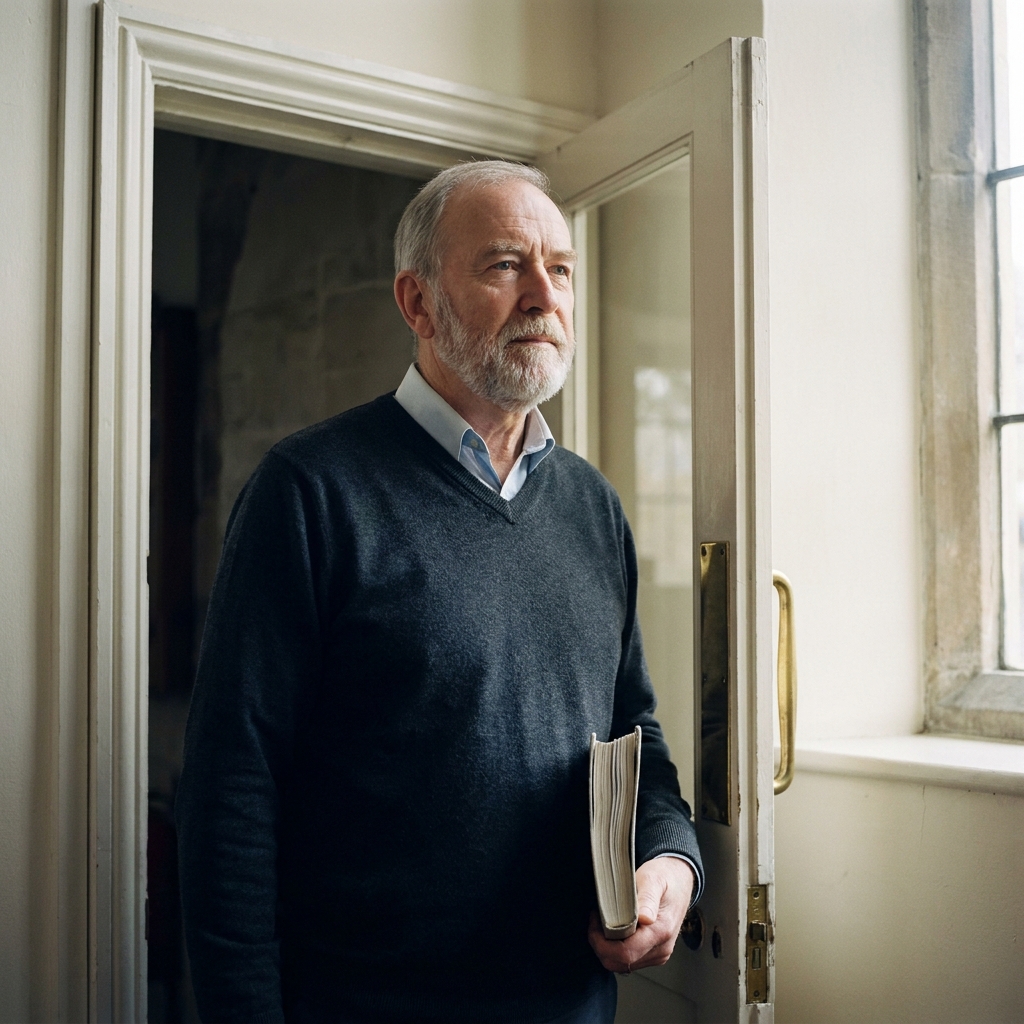
Secretary · Serving since 2023
A retired solicitor and life-long member of the parish, Christopher took on the secretary's role in . He keeps the minute-book and the registers of interests.
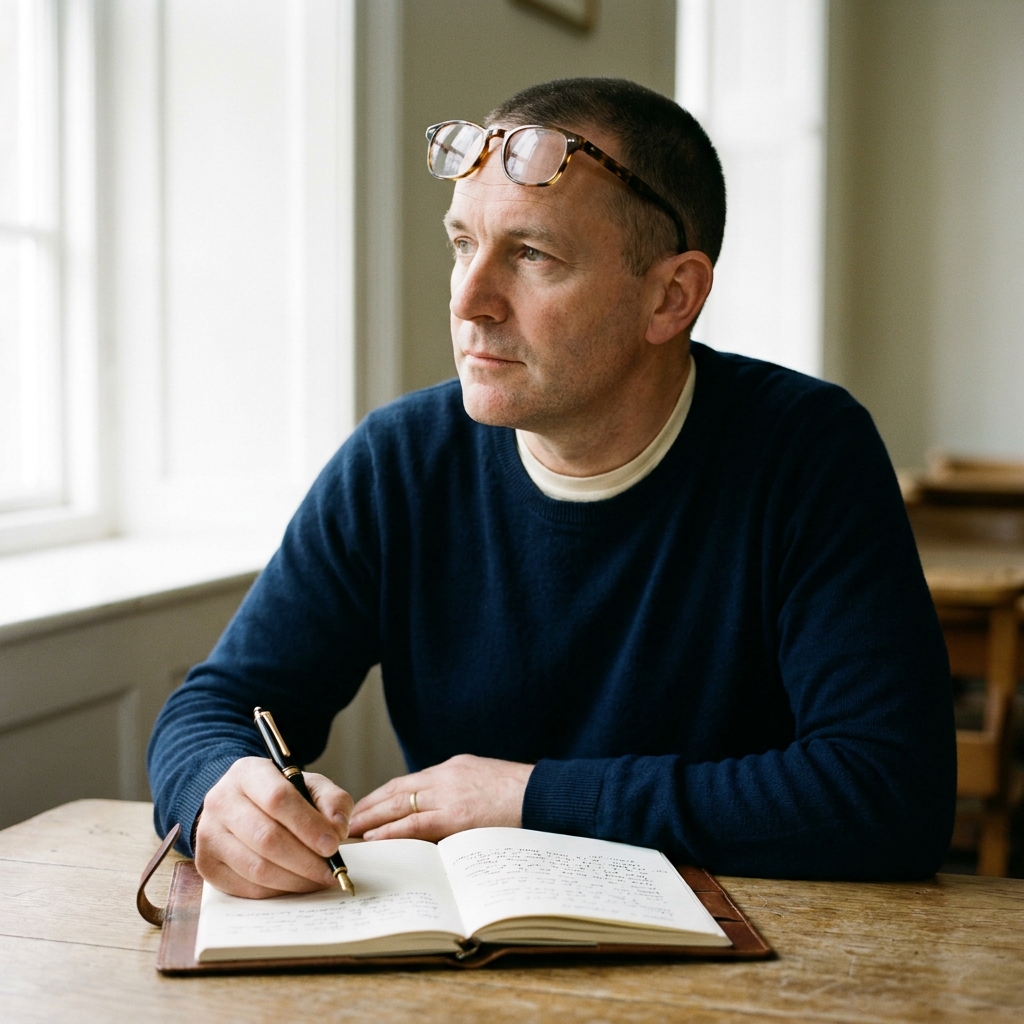
Treasurer · Serving since 2023
Matthew is a chartered accountant who works in the Lichfield office of a regional firm. He was appointed in and prepares the annual accounts.
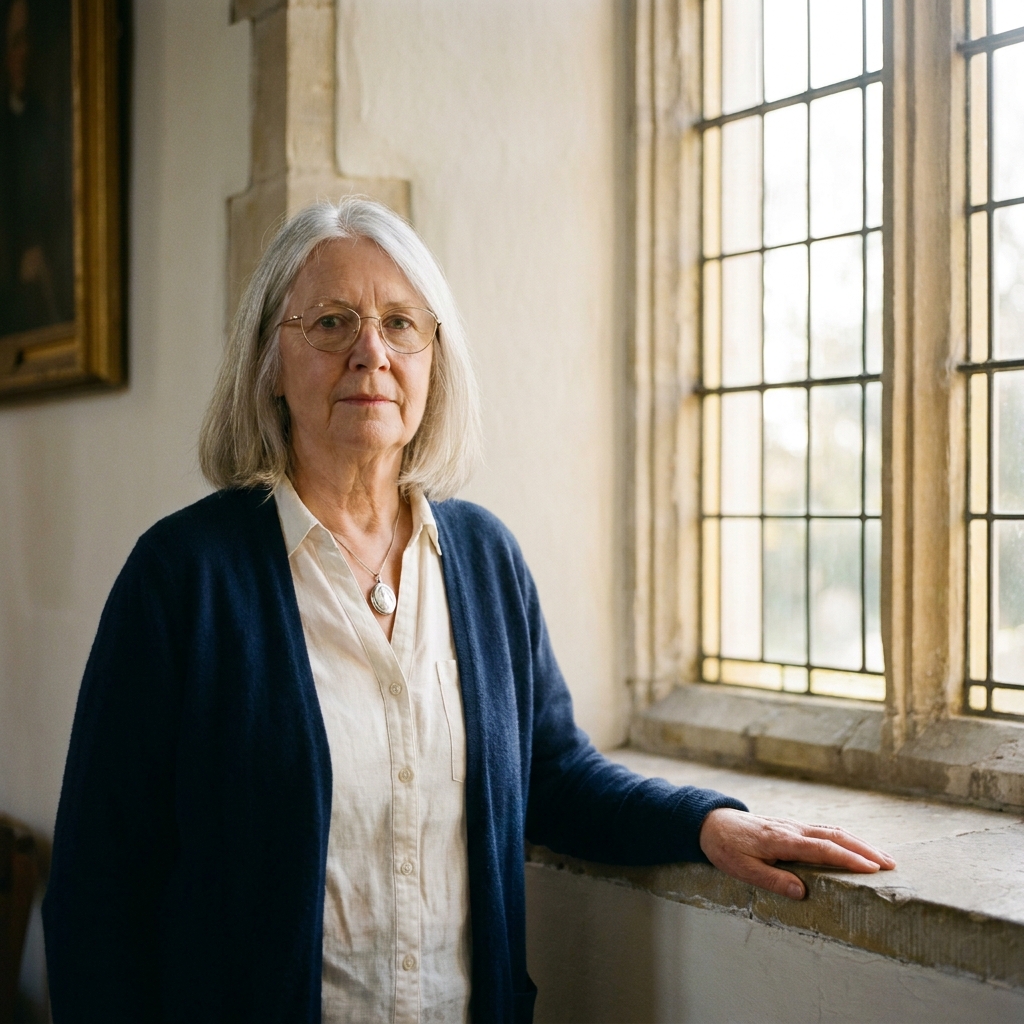
Senior trustee · Long service
The longest-serving trustee on the board, June leads on furnishings and on the Annual Naming service. A retired primary teacher from Newton, she is the trust's institutional memory.
The board also includes Alan Humpage (appointed Oct 2025), Ann Marie Reeves (appointed Oct 2025; both Alan and Ann Marie are also trustees of the Parochial Church Council of St Margaret's, Charity 5005930), David M Milne , and David John Large . Trustee biographies as published in the most recent Trustees' Annual Report.
Governance, plainly stated
Meetings
The trustees meet four times a year — quarterly, on the first Tuesday — and once again in October for the annual general meeting. Meetings take place in the parish room at St Margaret's or, by exception, at the registered office in Streethay.
Quorum
A quorum is three trustees, as set down by the Variation Scheme of 1966. In practice no consequential business is taken at fewer than five.
Grant policy
Grants are made only within the seven objects, only to the Parochial Church Council of St Margaret's (or, occasionally, to recognised conservation contractors on its behalf), and only where the PCC has submitted an annual schedule of works.
Conflicts
A register of interests is maintained by the Secretary. Trustees who also serve on the PCC of St Margaret's withdraw from the grant decision and the minute records their withdrawal.
Reserves
A formal reserves policy, reviewed annually, requires the Restoration Reserve to be maintained at not less than six times prior-year fabric expenditure.
Audit
As a charity below the audit threshold, our accounts receive an independent examination, currently by a Lichfield-based ICAEW practitioner. The full report is published with the annual return.
The latest accounts — year to 31 Dec 2024
Income
£83,458
Interest on the endowment plus modest fundraising.
Expenditure
£26,089
Of which 88% reached the named programmes.
Trustees
8
All unpaid; no expenses claimed in 2024.
Volunteers
10
Working roll at the end of the reporting year.
Filed with the Charity Commission on , ahead of statutory deadline. Independent examination by H&C Lichfield, ICAEW.
Read all annual reportsIf you would like to help