
Six named programmes
The work is small, named and named again — so that nothing gets lost between one trustees' meeting and the next.
Below are the six programmes through which Great Barr Church Lands disburses its annual income. Each maps directly to one or more of the seven charitable objects of the 1891 Scheme. Each has a named lead trustee, a named beneficiary group, and a small annual budget.
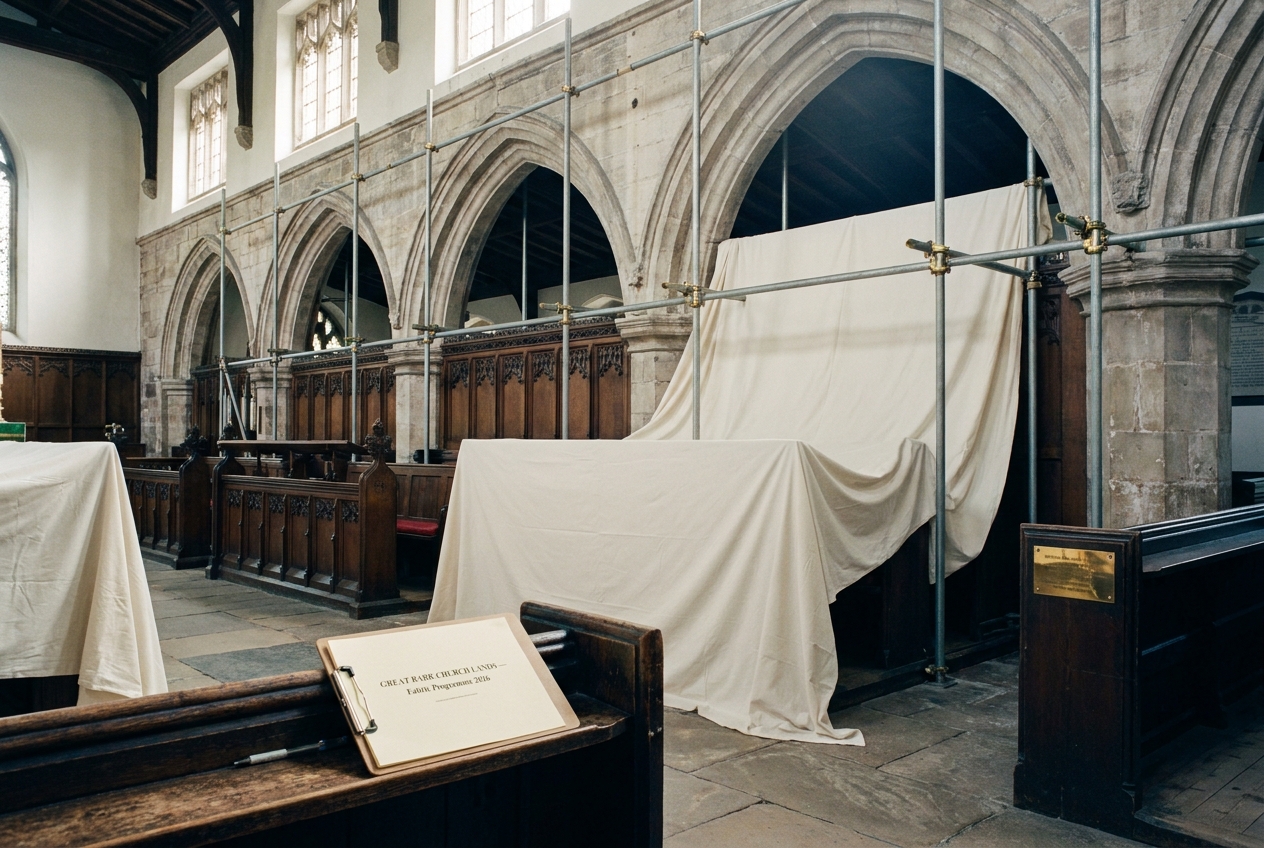
Above · The south aisle, between phases — March 2026.
On this page
Jump to a programme
Programme 01 · Object I & II
The Fabric Fund
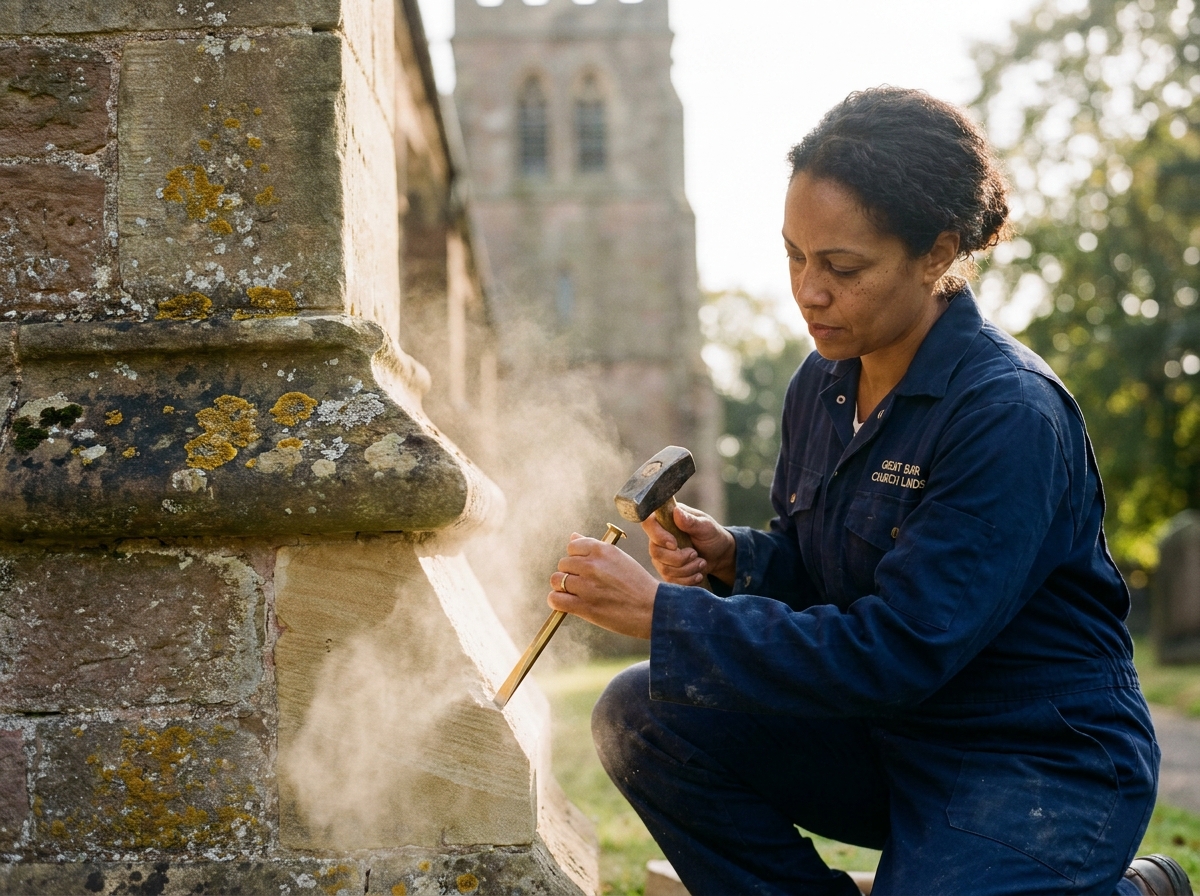
A roof, a wall, a window, a path. The first of our charitable objects names the maintenance and ordinary repair of the fabric of St Margaret's, payable to the Churchwardens. In practice this is the largest of our annual disbursements.
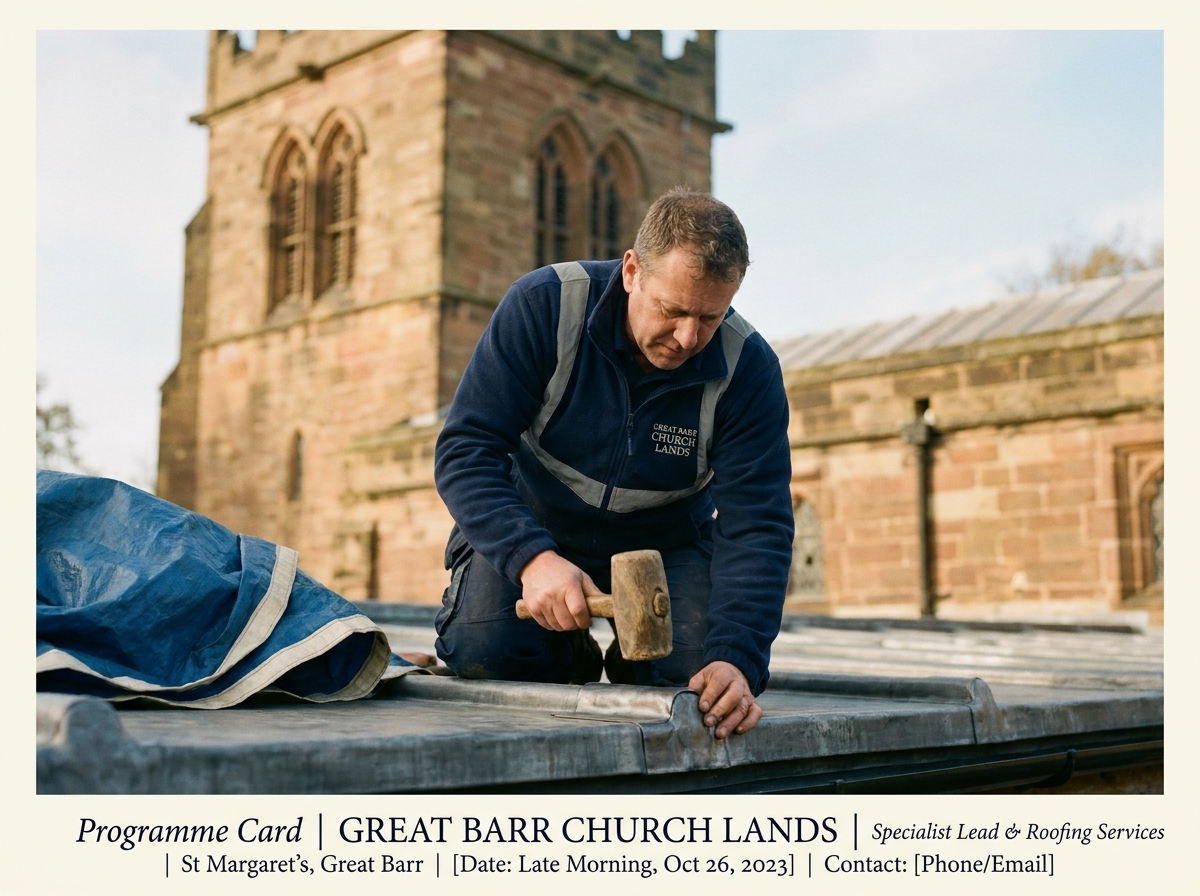
The Fabric Fund covers ordinary fabric — gutters cleared each November, leadwork laps re-dressed as they fail, sandstone quoins replaced after frost damage, masonry pointing in the south-west buttress. Work is specified by the Diocesan Advisory Committee architect, tendered to two trusted West Midlands craft firms, and undertaken between Easter and the start of Advent. The 2026 schedule includes south aisle leadwork (in progress), gutter renewal on the north transept, and the easing of two churchyard paths.
- Lead trustee
- Mark Howell
- Beneficiary
- PCC of St Margaret's, Great Barr
- Geography
- Ecclesiastical Parish of Great Barr
- 2026 budget
- £11,400 (excl. campaign)
- Supported by
- Allchurches Trust · Historic England
Programme 02 · Object VI
The Graveyard Trust
The 1891 Scheme is explicit: the maintenance and enlargement of the graveyard. We pay for the mower, the strimmer, the contractor who comes after a storm, and the small refreshment afterwards.
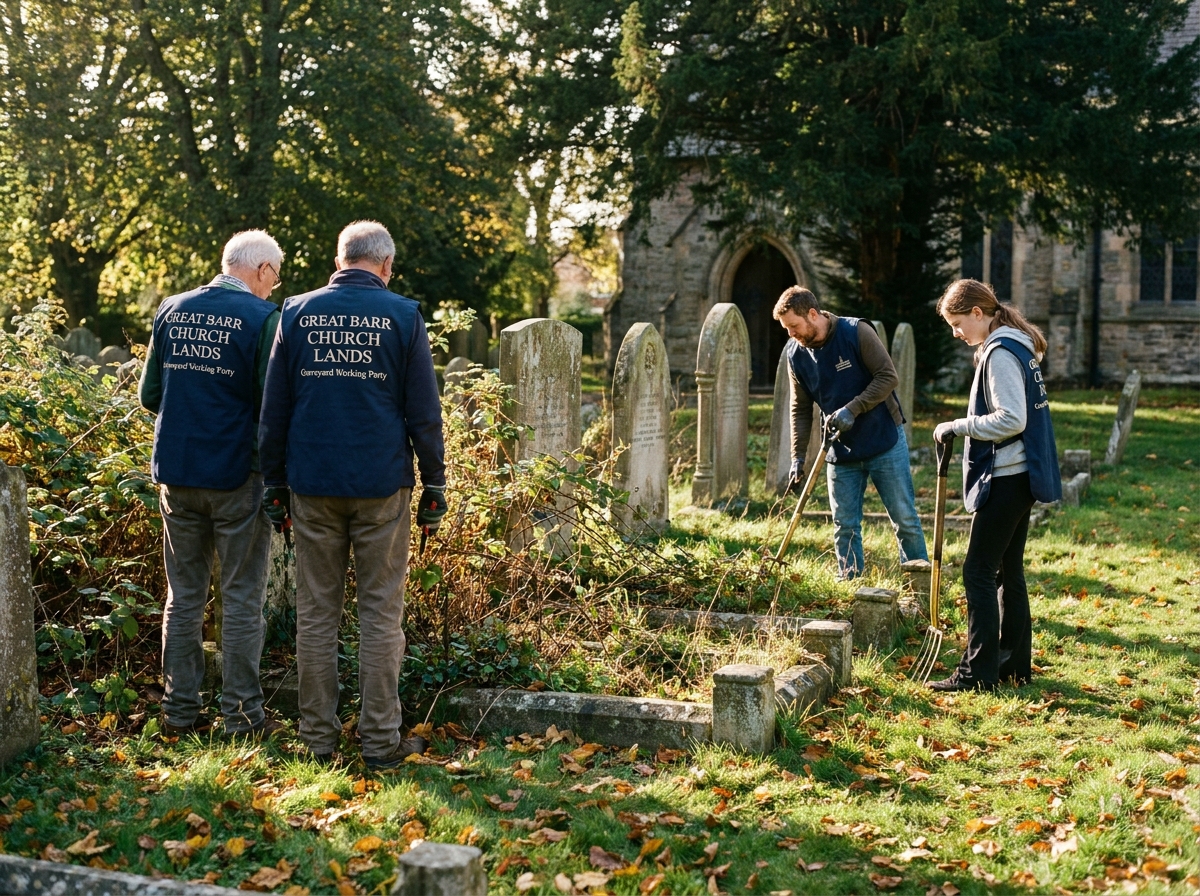
Mowing runs monthly from April to October, with a strict 'No Mow May' on the long-grass meadow strip along the north boundary. Two Saturday working parties — one in spring, one in October — bring together a small group of regular volunteers to clear brambles, right kerb-set headstones, and survey lichens. Through the Burial Records project, we are slowly photographing and transcribing every inscription in the yard; about 64% is now online.
- Lead trustee
- June Aubrook
- Beneficiary
- Bereaved families, parish historians
- Geography
- South and east yards, St Margaret's
- 2026 budget
- £3,800
- Supported by
- Sandwell MBC · Burial Records volunteers
Programme 03 · Object I
The Parish Clerk Stipend
The first object of the trust, often overlooked: a small quarterly payment to the lay clerk who keeps the registers, the diary and the pew sheet of St Margaret's.
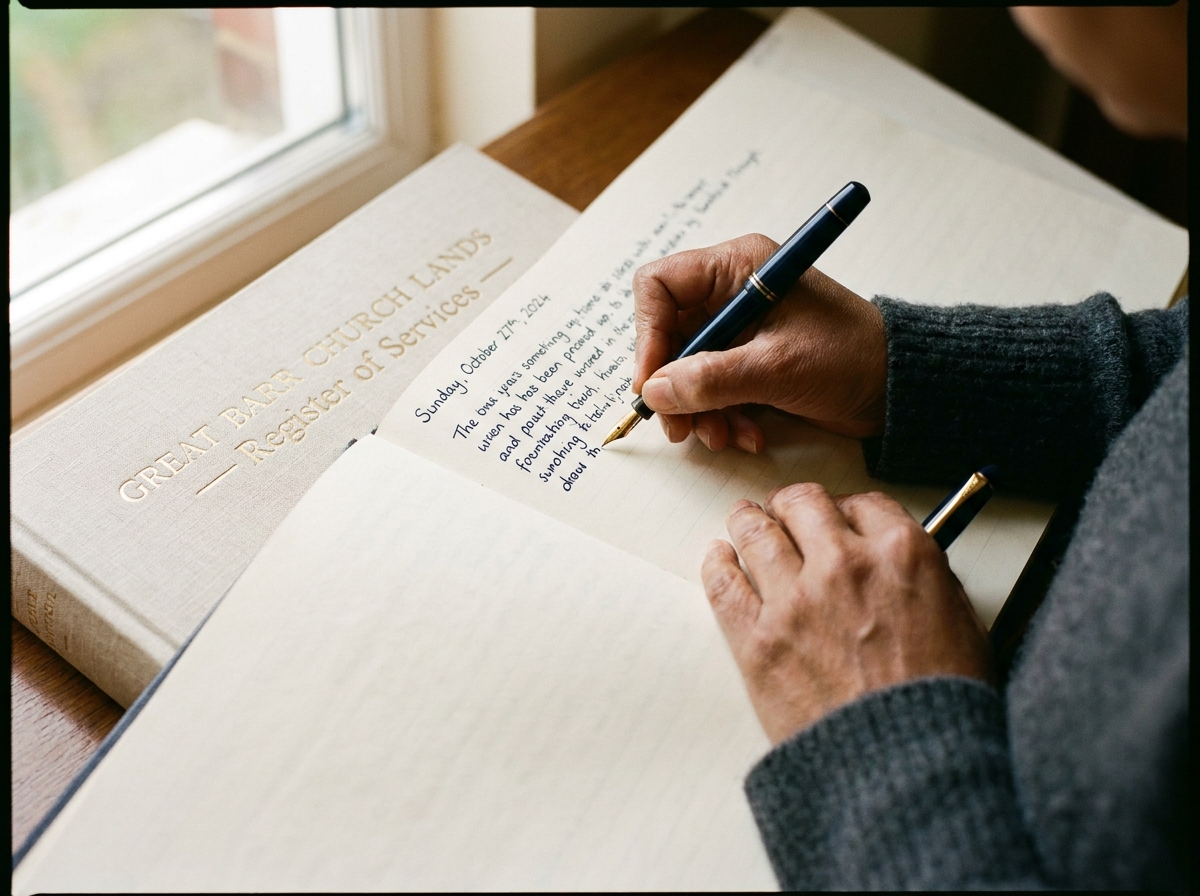
The current parish clerk has been in post since 2017 and works six hours a week. She maintains the marriage book, the burial book, the register of services, the weekly printed liturgy and the parish diary. The post is a small but careful one, and the trust meets the stipend in full; the PCC meets her expenses and provides a small office in the parish room.
- Lead trustee
- Christopher Pritchard
- Beneficiary
- Parish clerk · PCC
- Hours
- 6 hours/week, term-time pattern
- 2026 budget
- £4,420 (stipend only)
Programme 04 · Object IV
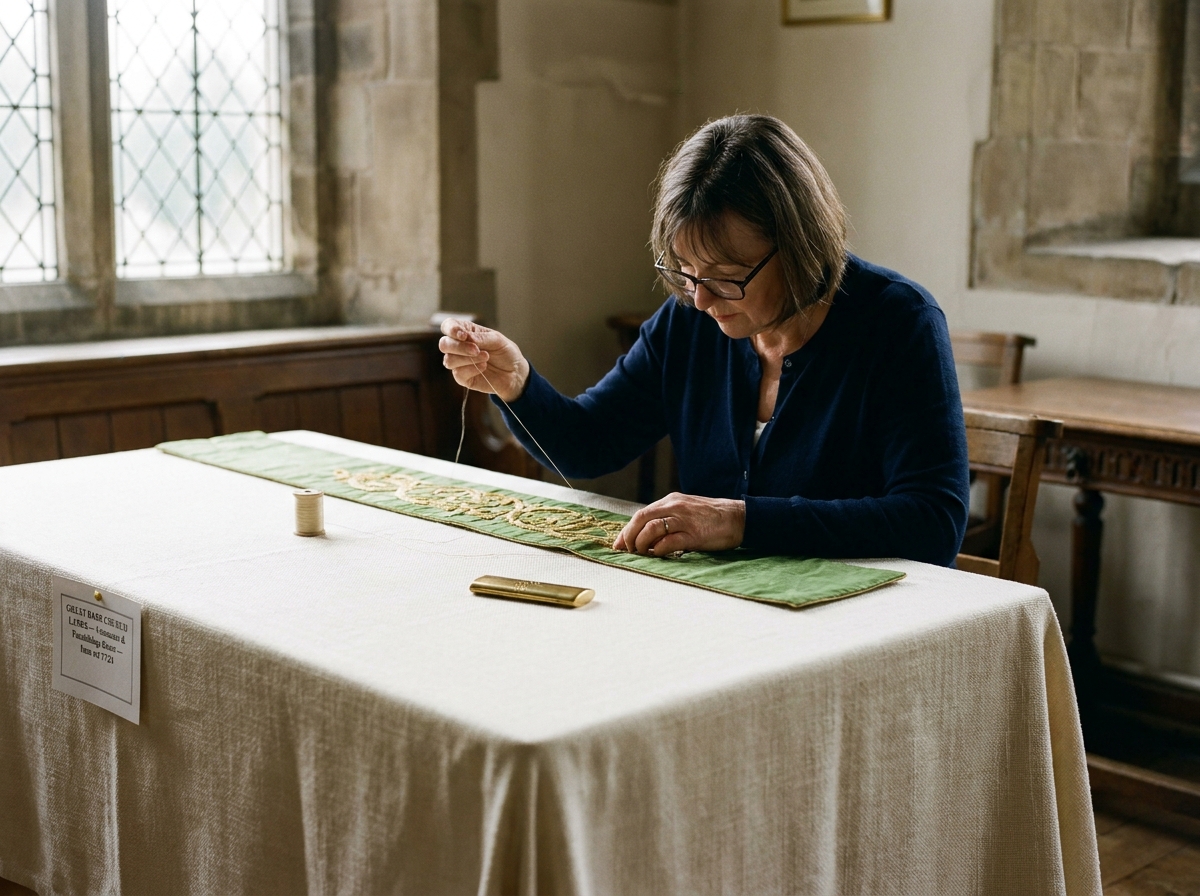
Vestments & Furnishings Grant
Small grants — typically £200 to £1,500 — for the cleaning, repair or replacement of frontals, copes, chasubles, kneelers and altar linen.
Where a piece is over fifty years old, work is let to recognised textile conservators on the Institute of Conservation's accredited list. Recent grants have supported the restoration of the green Pentecostal frontal (2024, £820), the renewal of choir-stall hassock covers (2023, £1,160), and the repair of the silver-plate ciborium (2022, £640). New commissions are rare; we prefer to mend what is already in use.
- Lead trustee
- June Aubrook
- Beneficiary
- Worshipping congregation
- 2026 budget
- £2,400
- Supported by
- Allchurches Trust (occasional)
Programme 05 · Object V
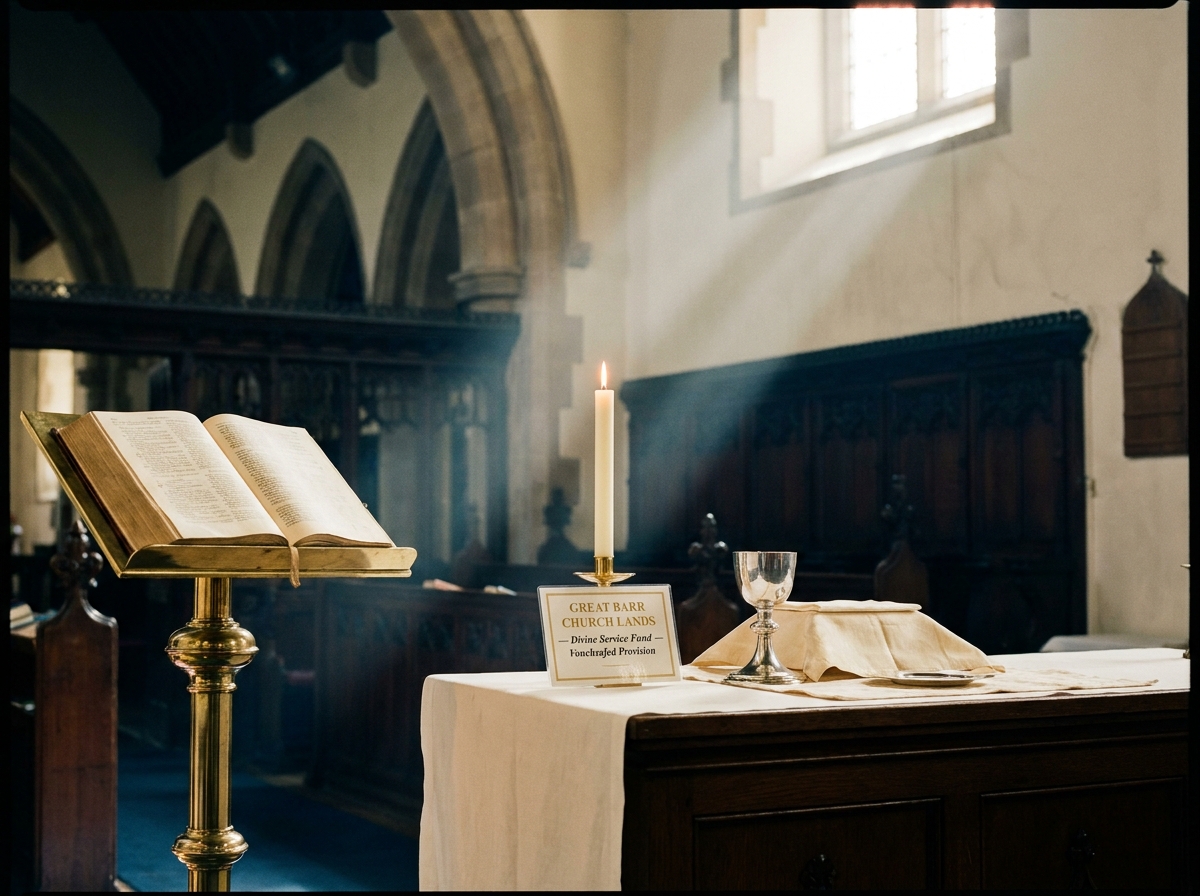
The Divine Service Fund
The weekly housekeeping of worship: beeswax candles by the gross, communion wafers, laundered linen, sheet music, replacement hymn books and printed liturgy.
If the Fabric Fund is the trust's biggest annual line, the Divine Service Fund is its most constant. About £4,200 a year, paid in twelve monthly tranches, against itemised invoices from the parish. The PCC's Sacristy account is independently bookkept, and the trustees see a reconciliation each quarter.
- Lead trustee
- David M Milne
- Beneficiary
- Worshipping congregation, choir, servers
- 2026 budget
- £4,200
Programme 06 · Object III
The Restoration Reserve
A long-horizon fund for work that one year's income cannot meet on its own. Currently £148,200; ring-fenced; replenished at not less than 4% of investment income each year.
The Restoration Reserve is the trust's slowest-moving part. It is what allows us to commit £40,000 in a single year to the south aisle roof without abandoning the Fabric Fund's ordinary programme; it is what will, in some future decade, pay for the re-pointing of the tower. The reserves policy is reviewed each October and published with the accounts.
- Lead trustee
- Matthew Hardy
- Held with
- CCLA Investment Management
- Reserve, 31 Dec 2024
- £148,200
- Replenishment policy
- ≥ 4% of investment income p.a.
If you would like to help